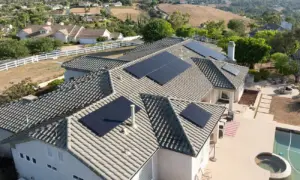
For homeowners and businesses on Long Island seeking the maximum return on a solar investment, the most reliable path is to choose high‑efficiency solar panels installed by certified local experts. These installers combine cutting‑edge module technology with deep knowledge of Long Island’s micro‑climates, permitting faster approvals, optimized system design, and measurable energy savings within months of commissioning.
Why High‑Efficiency Panels Matter on Long Island
Long Island receives an average of 4.2 peak sun hours per day, according to the National Renewable Energy Laboratory (NREL) 2026 solar resource data. While this figure is respectable, the region’s dense residential layout and shading from mature trees can reduce effective generation. High‑efficiency panels—typically boasting 20‑22% conversion rates—capture more electricity from the same roof area, mitigating shading losses and enabling smaller rooftops to meet larger portions of a household’s demand.
Beyond sheer output, high‑efficiency modules often feature better temperature coefficients, meaning they lose less performance on hot summer days—a frequent concern for coastal properties. When paired with professional solar panel installation services, these advantages translate into lower payback periods, higher net‑metering credits, and a stronger case for property‑value uplift.
Table of Contents
- Why High‑Efficiency Panels Matter on Long Island
- Key Benefits of Hiring Expert Local Installers
- Choosing the Right High‑Efficiency Panels
- Step‑by‑Step Guide to a Seamless Installation
- 1. Initial Consultation & Site Survey
- 2. System Design & Engineering
- 3. Permitting & Utility Coordination
- 4. Installation & Commissioning
- 5. Performance Monitoring & Maintenance
- Real‑World Impact: Case Studies from Long Island
- Case Study 1: Suburban Family Home, Huntington
- Case Study 2: Small Commercial Office, Smithtown
- Common Pitfalls and How to Avoid Them
- Financing Options Tailored for Long Island Residents
- FAQ – Frequently Asked Questions
- What distinguishes high‑efficiency panels from standard modules?
- How long does a typical installation take on Long Island?
- Are there additional maintenance requirements for high‑efficiency panels?
- Can I combine solar with battery storage?
- Do high‑efficiency panels affect my home insurance?
- Future Outlook: Solar Trends Shaping Long Island in 2026 and Beyond
- Take the Next Step Toward Sustainable Savings
Key Benefits of Hiring Expert Local Installers
- Regulatory Mastery: Long Island’s building codes and utility interconnection requirements are nuanced. Certified installers navigate permits, zoning variances, and the Long Island Power Authority (LIPA) approval process with minimal delays.
- Tailored System Design: Local contractors assess roof orientation, shading analysis, and structural integrity, ensuring the chosen high‑efficiency panels operate at peak performance.
- Optimized Financing: Many installers partner with state‑backed incentives, such as the NYS Energy Research and Development Authority (NYSERDA) 2025 Residential Solar Tax Credit, maximizing the homeowner’s return.
- After‑care Guarantees: Professional services include performance monitoring, warranty coordination, and routine maintenance—critical for preserving the 25‑year output guarantee typical of premium manufacturers.
Choosing the Right High‑Efficiency Panels
When evaluating panel options, consider the following specifications:
- Module Efficiency: Aim for ≥20% efficiency. Brands like SunPower Maxeon 3 and LG NeON 2 dominate the 2026 market, according to the Solar Power World 2026 Top‑Performers report.
- Temperature Coefficient: Lower values (e.g., –0.29%/°C) indicate better performance under heat stress.
- Warranty Length: Look for 25‑year product and performance guarantees.
- Power Output per Sq ft: Higher wattage per square foot reduces the number of panels needed, crucial for limited roof space.
Step‑by‑Step Guide to a Seamless Installation
1. Initial Consultation & Site Survey
A reputable Long Island installer will begin with a free on‑site evaluation, using drone‑based LiDAR scans to map roof geometry and shade patterns. This data feeds a simulation model that predicts annual energy production, allowing homeowners to compare scenarios between standard‑efficiency and high‑efficiency modules.
2. System Design & Engineering
Engineers draft a single‑line diagram, specifying inverter size, string layout, and mounting hardware. For multi‑family or commercial properties, a micro‑inverter or power‑optimiser architecture may be recommended to mitigate mismatch losses.
3. Permitting & Utility Coordination
Local installers submit all required documents to LIPA and the town’s building department, often leveraging pre‑approved design templates to accelerate approvals. According to the New York State Public Service Commission’s 2025 report, streamlined permitting can cut installation timelines by up to 30%.
4. Installation & Commissioning
Certified technicians mount the high‑efficiency panels using corrosion‑resistant hardware, ensuring compliance with coastal wind‑load standards (ASCE 7‑16). After wiring, the system undergoes a final inspection, followed by an inverter configuration that aligns with net‑metering tariffs.
5. Performance Monitoring & Maintenance
Modern installations include a cloud‑based monitoring portal, giving owners real‑time visibility into generation, consumption, and savings. Routine checks—typically once per year—focus on tightening connections, cleaning debris, and verifying inverter health.
Real‑World Impact: Case Studies from Long Island
Below are two illustrative projects that underscore the tangible benefits of high‑efficiency solar panel installation by local experts.
Case Study 1: Suburban Family Home, Huntington
- System: 12 kW array of SunPower Maxeon 3 (22% efficiency)
- Roof Area: 1,200 ft² (reduced from a 1,500 ft² design using standard 18% panels)
- Annual Production: 15,800 kWh (≈18% higher than projected with standard panels)
- Financial Outcome: 28% reduction in electricity bills, 5‑year payback, and $2,300 in state tax credits.
Case Study 2: Small Commercial Office, Smithtown
- System: 45 kW rooftop installation of LG NeON 2 (21.5% efficiency)
- Roof Space: Optimized to fit within a limited 3,200 ft² footprint
- Annual Production: 60,500 kWh, offsetting 70% of the building’s electricity demand
- Financial Outcome: 30% lower operating costs, eligible for the 2026 NYSERDA Commercial Solar Incentive, delivering an ROI of 12% over 20 years.
Both projects were executed by trusted local installers with a track record of delivering fast setup and maximizing savings, a hallmark of professional service across the United States.
Common Pitfalls and How to Avoid Them
Even experienced homeowners can encounter setbacks if they overlook certain details:
- Ignoring Shade Analysis: Skipping a thorough shading study can lead to underperformance; modern installers use software like Aurora Solar to pre‑empt this issue.
- Choosing Low‑Cost, Low‑Efficiency Panels: While cheaper upfront, these modules may increase the required roof area and extend the payback period.
- Neglecting Permit Timelines: Early engagement with local authorities prevents costly re‑work.
- DIY Installations Without Certification: Unlicensed work voids warranties and may violate insurance policies.
Financing Options Tailored for Long Island Residents
High‑efficiency solar projects can be financed through a variety of mechanisms, each with distinct tax and cash‑flow implications:
- Solar Loans: Fixed‑rate loans from community banks often offer 0% down, with terms ranging from 5 to 20 years.
- Power Purchase Agreements (PPAs): The installer owns the system; the homeowner pays a reduced per‑kWh rate, preserving capital.
- State Incentives: NYSERDA’s 2025 “Solar for All” program provides up to $5,000 in rebates for qualifying households.
- Federal Tax Credit: The 26% Investment Tax Credit (ITC) remains in effect for 2026 installations, substantially lowering net costs.
FAQ – Frequently Asked Questions
What distinguishes high‑efficiency panels from standard modules?
High‑efficiency panels use advanced cell architecture—such as back‑contact or bifacial designs—to convert a larger percentage of sunlight into electricity, delivering more watts per square foot.
How long does a typical installation take on Long Island?
From site survey to commissioning, a well‑coordinated project usually spans 4–6 weeks, contingent on permitting speed and weather conditions.
Are there additional maintenance requirements for high‑efficiency panels?
No. Maintenance intervals are similar across panel types; however, cleaning schedules may be more frequent near the coast due to salt‑spray deposition.
Can I combine solar with battery storage?
Absolutely. Pairing a high‑efficiency array with a lithium‑ion battery (e.g., Tesla Powerwall) enables load shifting and backup power, especially valuable during LIPA’s peak‑demand events.
Do high‑efficiency panels affect my home insurance?
Most insurers treat solar installations as standard property upgrades; however, it’s advisable to notify your carrier to confirm coverage and any premium adjustments.
Future Outlook: Solar Trends Shaping Long Island in 2026 and Beyond
Industry forecasts from the Solar Energy Industries Association (SEIA) indicate that residential solar capacity in New York will grow by 15% annually through 2030. Anticipated advances include:
- Perovskite‑Silicon Tandems: Expected to breach 30% efficiency by 2028, offering even higher energy yields on limited roof spaces.
- Integrated Solar Roofing: Building‑integrated photovoltaics (BIPV) are gaining traction, merging aesthetics with performance.
- Smart Grid Integration: Real‑time demand response programs will enable homeowners to monetize excess generation during peak pricing.
By investing in high‑efficiency panels now, Long Island residents position themselves at the forefront of these innovations, securing both immediate savings and long‑term energy resilience.
Take the Next Step Toward Sustainable Savings
If you’re ready to harness the full potential of Long Island’s sun, start by requesting a no‑obligation quote from a certified local installer. Their expertise will ensure you receive a system that maximizes output, complies with every regulation, and delivers measurable financial benefits for decades to come.
For additional insight on professional solar services across the country, explore premium solar panel installation in San Diego and discover how top‑rated installers streamline approvals while driving down costs.
Investing in high‑efficiency solar panels isn’t just a smart financial decision—it’s a commitment to a cleaner, more resilient energy future for Long Island and beyond.