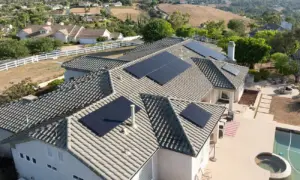
For homeowners and businesses on Long Island seeking the maximum return on a solar investment, the most reliable path is to choose high‑efficiency solar panels installed by certified local experts. These installers combine cutting‑edge module technology with deep knowledge of Long Island’s micro‑climates, permitting faster approvals, optimized system design, and measurable energy savings within months of commissioning.
Why High‑Efficiency Panels Matter on Long Island
Long Island receives an average of 4.2 peak sun hours per day, according to the National Renewable Energy Laboratory (NREL) 2026 solar resource data. While this figure is respectable, the region’s dense residential layout and shading from mature trees can reduce effective generation. High‑efficiency panels—typically boasting 20‑22% conversion rates—capture more electricity from the same roof area, mitigating shading losses and enabling smaller rooftops to meet larger portions of a household’s demand.
Beyond sheer output, high‑efficiency modules often feature better temperature coefficients, meaning they lose less performance on hot summer days—a frequent concern for coastal properties. When paired with professional solar panel installation services, these advantages translate into lower payback periods, higher net‑metering credits, and a stronger case for property‑value uplift.
Table of Contents
- Why High‑Efficiency Panels Matter on Long Island
- Key Benefits of Hiring Expert Local Installers
- Choosing the Right High‑Efficiency Panels
- Step‑by‑Step Guide to a Seamless Installation
- 1. Initial Consultation & Site Survey
- 2. System Design & Engineering
- 3. Permitting & Utility Coordination
- 4. Installation & Commissioning
Key Benefits of Hiring Expert Local Installers
- Regulatory Mastery: Long Island’s building codes and utility interconnection requirements are nuanced. Certified installers navigate permits, zoning variances, and the Long Island Power Authority (LIPA) approval process with minimal delays.
- Tailored System Design: Local contractors assess roof orientation, shading analysis, and structural integrity, ensuring the chosen high‑efficiency panels operate at peak performance.
- Optimized Financing: Many installers partner with state‑backed incentives, such as the NYS Energy Research and Development Authority (NYSERDA) 2025 Residential Solar Tax Credit, maximizing the homeowner’s return.
- After‑care Guarantees: Professional services include performance monitoring, warranty coordination, and routine maintenance—critical for preserving the 25‑year output guarantee typical of premium manufacturers.
Choosing the Right High‑Efficiency Panels
When evaluating panel options, consider the following specifications:
- Module Efficiency: Aim for ≥20% efficiency. Brands like SunPower Maxeon 3 and LG NeON 2 dominate the 2026 market, according to the Solar Power World 2026 Top‑Performers report.
- Temperature Coefficient: Lower values (e.g., –0.29%/°C) indicate better performance under heat stress.
- Warranty Length: Look for 25‑year product and performance guarantees.
- Power Output per Sq ft: Higher wattage per square foot reduces the number of panels needed, crucial for limited roof space.
Step‑by‑Step Guide to a Seamless Installation
1. Initial Consultation & Site Survey
A reputable Long Island installer will begin with a free on‑site evaluation, using drone‑based LiDAR scans to map roof geometry and shade patterns. This data feeds a simulation model that predicts annual energy production, allowing homeowners to compare scenarios between standard‑efficiency and high‑efficiency modules.
2. System Design & Engineering
Engineers draft a single‑line diagram, specifying inverter size, string layout, and mounting hardware. For multi‑family or commercial properties, a micro‑inverter or power‑optimiser architecture may be recommended to mitigate mismatch losses.
3. Permitting & Utility Coordination
Local installers submit all required documents to LIPA and the town’s building department, often leveraging pre‑approved design templates to accelerate approvals. According to the New York State Public Service Commission’s 2025 report, streamlined permitting can cut installation timelines by up to 30%.
4. Installation & Commissioning
Certified technicians mount the high‑efficiency panels using corrosion‑resistant hardware, ensuring compliance with coastal wind‑load standards (ASCE 7‑16). After wiring, the system undergoes a final inspection, followed by an inverter configuration that aligns with net‑metering tariffs.