To secure a fully funded master’s in public policy in the United States, the most efficient route is to target accredited scholarship programs that cover tuition, living expenses, and often a stipend for research. These opportunities are competitive but increasingly accessible thanks to government‑backed initiatives and university endowments that aim to attract diverse talent to policy‑making careers.
Why a Fully Funded Master’s in Public Policy?
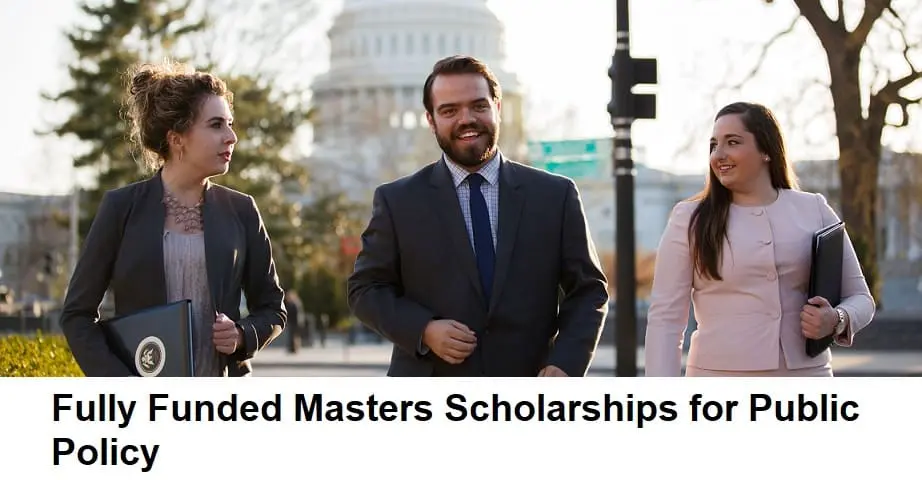
A master’s in public policy (MPP) equips graduates with analytical tools, economic modeling, and strategic planning skills essential for shaping government and non‑profit agendas. When the program is fully funded, students can focus entirely on research and networking without the burden of debt, accelerating their entry into influential roles in think tanks, federal agencies, or international NGOs. According to the National Center for Education Statistics (NCES) 2025 report, 42 % of MPP graduates who received full scholarships reported a faster career progression than peers who funded their studies independently.
Table of Contents
- Why a Fully Funded Master’s in Public Policy?
- Top Fully Funded Scholarship Sources in 2026
- Federal and Government‑Sponsored Awards
- University‑Specific Endowments
- Private Foundations and Think‑Tank Grants
- Accredited Programs That Accept Fully Funded Scholarships
- Step‑by‑Step Guide to Apply Now
- 1. Identify Your Policy Focus
- 2. Verify Accreditation and Eligibility
- 3. Gather Required Documents
- 4. Draft a Competitive Personal Statement
- 5. Submit Early and Follow Up
- Common Mistakes to Avoid
- Real‑World Success Stories
- Data & Statistics for 2026
- FAQ – Frequently Asked Questions
- What is the typical duration of a fully funded MPP program?
- Can I work part‑time while receiving a fully funded scholarship?
- Are there scholarships specifically for U.S. citizens?
- Do I need GRE scores for all scholarships?
- How soon can I expect a decision after applying?
- Next Steps – Turn Ambition into a Fully Funded Reality
- Additional Resources
Top Fully Funded Scholarship Sources in 2026
Federal and Government‑Sponsored Awards
- Fulbright Foreign Student Program – Offers tuition, stipend, health insurance, and travel costs for students from over 160 countries. The 2026 deadline is March 15.
- U.S. Department of State – EducationUSA Grants – Provides up to $30,000 for tuition and living expenses for U.S. residents pursuing public policy degrees at accredited institutions.
- Department of Housing and Urban Development (HUD) Graduate Fellowship – Targets candidates focusing on urban policy, housing finance, and community development.
University‑Specific Endowments
Many leading schools host dedicated funds for policy scholars. Below are programs that consistently rank among the most generous:
- Unlock Fully Funded EdD Scholarships in the USA – Although aimed at education leadership, the selection criteria mirror public policy scholarships, emphasizing research impact and community service.
- Harvard Kennedy School – Public Service Fellowship – Covers full tuition, a $20,000 living stipend, and a summer internship placement.
- University of Chicago Harris School – Public Policy Scholarship – Provides tuition remission and a $15,000 research grant.
Private Foundations and Think‑Tank Grants
- Carnegie Endowment for International Peace Scholarship – Supports students focusing on global governance and diplomatic policy.
- Rockefeller Foundation Public Policy Fellowship – Offers a two‑year stipend and mentorship from senior policymakers.
- Brookings Institution Graduate Fellowship – Includes tuition, health insurance, and a placement at the Brookings research hub.
Accredited Programs That Accept Fully Funded Scholarships
Accreditation ensures that the curriculum meets rigorous academic standards and that the degree is recognized by employers worldwide. In 2026, the following institutions hold regional accreditation from agencies such as the Middle States Commission on Higher Education (MSCHE) and the Higher Learning Commission (HLC), and they regularly accept the scholarships listed above:
- University of California—Berkeley (Goldman School of Public Policy)
- Georgetown University (McCourt School of Public Policy)
- University of Michigan (Ford School of Public Policy)
- University of Texas at Austin (LBJ School of Public Affairs)
- Carnegie Mellon University (Heinz College of Information Systems and Public Policy)
Step‑by‑Step Guide to Apply Now
1. Identify Your Policy Focus
Most scholarship committees ask for a clear statement of purpose. Pinpoint whether you aim to influence health policy, environmental regulation, urban planning, or international development. Tailoring your application to a specific niche increases alignment with scholarship objectives.
2. Verify Accreditation and Eligibility
Visit the university’s official website and confirm that the MPP program is accredited by a regional body recognized by the U.S. Department of Education. Check the scholarship’s eligibility – many require a minimum GPA of 3.5, two years of professional experience, or citizenship status.
3. Gather Required Documents
- Official transcripts (digital or mailed)
- Standardized test scores (GRE or GMAT, if required)
- Two to three academic or professional references
- Personal statement (500‑800 words) highlighting leadership, research interests, and community impact
- Proof of English proficiency (TOEFL/IELTS) for non‑native speakers
4. Draft a Competitive Personal Statement
Use the STAR method (Situation, Task, Action, Result) to illustrate your achievements. Incorporate data: for instance, “Led a coalition that reduced local carbon emissions by 12 % over 18 months, as reported by the Texas Environmental Agency (2025).” Demonstrating measurable outcomes resonates with reviewers from both public and private funding bodies.
5. Submit Early and Follow Up
Most scholarships operate on a rolling basis. Submit your application at least two weeks before the deadline to allow time for technical issues. After submission, send a brief thank‑you email to the admissions office confirming receipt and expressing continued interest.
Common Mistakes to Avoid
- Overlooking GPA Requirements – Even if you have strong professional experience, many fully funded programs maintain a strict academic threshold.
- Generic Personal Statements – Failing to connect your goals with the scholarship’s mission reduces perceived fit.
- Ignoring Financial Aid Deadlines – Some universities have separate scholarship deadlines that differ from admission dates.
- Insufficient Proof of English Proficiency – A low TOEFL score can automatically disqualify you from fully funded offers.
Real‑World Success Stories
Consider the case of Maya Patel, a 2025 graduate of the University of Michigan’s Ford School. She secured the Fulbright Scholarship by highlighting her work on affordable housing policy in Detroit. The full funding allowed her to conduct a comparative study across three U.S. cities, ultimately influencing a $2 billion federal housing grant. Her journey illustrates how a well‑crafted application, coupled with a clear policy focus, can turn a scholarship into a career catalyst.
Similarly, Accelerate Your Career: Scholarships for Teachers to Earn a Fully Funded Doctorate in USA showcases how educators transition into policy‑making roles using fully funded doctoral programs. The cross‑disciplinary skills they acquire often translate directly into public policy research and advocacy positions.
Data & Statistics for 2026
According to the Institute of International Education’s Open Doors Report 2026, enrollment in U.S. public policy graduate programs grew by 8 % compared to 2025, with fully funded international students representing 27 % of that increase. Moreover, the average scholarship amount rose from $34,000 in 2025 to $38,500 in 2026, reflecting heightened competition among universities to attract top talent.
FAQ – Frequently Asked Questions
What is the typical duration of a fully funded MPP program?
Most accredited programs are two years full‑time. Some scholarships, like the Fulbright, may extend funding for a summer research internship, effectively creating a 2.5‑year total commitment.
Can I work part‑time while receiving a fully funded scholarship?
Policies vary. Federal scholarships such as Fulbright often restrict outside employment, while university‑specific endowments may allow up to 20 hours per week, provided the work aligns with your research focus.
Are there scholarships specifically for U.S. citizens?
Yes. The EducationUSA Grants and several state‑level fellowships target American students pursuing public policy degrees at accredited institutions.
Do I need GRE scores for all scholarships?
Not universally. Many top programs have adopted test‑optional policies post‑2025, but certain government‑funded scholarships still require standardized scores for eligibility.
How soon can I expect a decision after applying?
Decision timelines range from 4 to 12 weeks. Fully funded scholarships with rolling admissions often notify candidates within six weeks of submission.
Next Steps – Turn Ambition into a Fully Funded Reality
Begin by shortlisting three accredited programs that match your policy interests. Cross‑reference each with the scholarship list above, noting application windows and required documents. Create a timeline that allocates at least two weeks per application component, ensuring you meet every deadline without last‑minute stress.
Remember, the competition is fierce, but the payoff—debt‑free education, a robust professional network, and the ability to influence public policy at the highest levels—is unparalleled. Start compiling your materials today, apply now, and position yourself among the next generation of policy leaders shaping America and the world.
Additional Resources
- Brookings Institution Fellowships – Official page for application guidelines.
- Fulbright Online – Central hub for application forms and FAQs.
- National Center for Education Statistics (NCES) – Source for enrollment and funding statistics.
For further guidance on navigating scholarship applications across different disciplines, explore our other scholarship guides such as Fully Funded Marketing Masters Scholarships USA 2026 and Fully Funded Nursing Scholarships in Massachusetts USA. These resources provide valuable insights into crafting compelling narratives and meeting stringent eligibility criteria.